
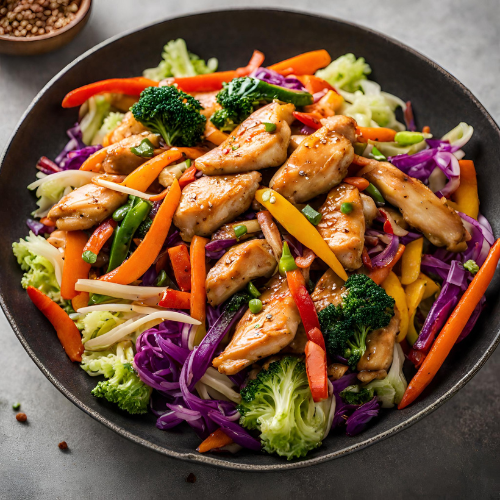
Ingredients:
- 1-2 boneless, skinless chicken breasts, thinly sliced
- 1 red or yellow sweet pepper, thinly sliced
- 1/2 head of cabbage, thinly sliced
- 2 carrots, julienned
- 1 small head of broccoli, coarsely chopped
- 2-3 celery stalks, thinly sliced
- 1/4 cup sliced ham, thinly sliced (omit if you prefer a fully chicken-based dish)
- 3-4 cloves garlic, minced
- 1-inch piece of ginger, minced
- Coconut aminos (a paleo-friendly soy sauce alternative)
- 1-2 tablespoons coconut oil or ghee
- 1 teaspoon sesame oil (ensure it’s pure sesame oil without added ingredients)
- Arrowroot powder for thickening
- Salt and pepper to taste
- Crushed red pepper flakes (optional for some heat)
- Cauliflower rice or zucchini noodles for serving (paleo alternatives to rice or regular noodles)
Instructions:
- In a small bowl, mix coconut aminos with the arrowroot powder to create a paleo-friendly sauce. Set aside.
- Heat a large skillet or wok over medium-high heat. Add coconut oil or ghee and swirl it around to coat the pan.
- Add the sliced chicken to the hot pan and stir-fry until it’s no longer pink and is cooked through. Remove the cooked chicken from the pan and set it aside.
- In the same pan, add a bit more coconut oil or ghee if needed and add the minced garlic and ginger. Stir-fry for about 30 seconds until fragrant.
- Add the sweet pepper, cabbage, carrots, and celery to the pan. Stir-fry for about 4-5 minutes or until the vegetables start to become tender but still crisp.
- Add the sliced ham (if using) and stir for another 2-3 minutes.
- Return the cooked chicken to the pan.
- Pour the coconut aminos and arrowroot mixture over the ingredients in the pan and toss everything together. Cook for an additional 2-3 minutes until everything is heated through and the sauce thickens.
- Season with salt, pepper, and red pepper flakes to taste.
- Serve the stir-fry over cauliflower rice or zucchini noodles as paleo alternatives to rice or noodles.
- Ketogenic: To make it keto-friendly, you would need to adjust the ingredient proportions to ensure it aligns with the macronutrient ratios of a ketogenic diet. This would likely involve increasing the proportion of fats and reducing carbs, such as the carrots.
- Autoimmune Protocol (AIP): The recipe can be modified to meet the AIP diet by eliminating black beans, nightshades (peppers), and any other non-compliant ingredients. Ensure the ingredients are all AIP-compliant.
- Low-FODMAP: Some of the vegetables in the recipe, like cabbage and garlic, may be high in FODMAPs. You can choose low-FODMAP alternatives or adjust the quantities to make it suitable for a low-FODMAP diet.
 Gut Friendly Kitchen
Leave a comment